The New China Tour Visits the Factory Floor
China’s new tech tours are not just founder field trips. They are a way to turn factories, showrooms, and robotics labs into proof that the future has a physical address.


The most revealing tourist attraction in China is not a skyline anymore. It is a factory floor.
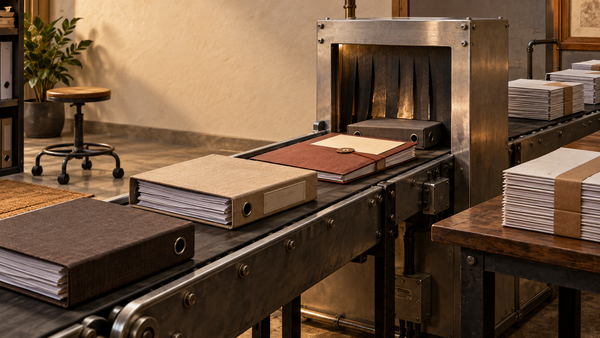
That sounds too literal until you look at the new itinerary. Foreign founders, investors, creators, and executives are not only visiting temples, towers, and shopping streets. They are booking trips through robotics firms, EV showrooms, AI startups, battery supply chains, and industrial parks. The old technology pilgrimage took ambitious people to Silicon Valley to see where software culture was made. The new one takes them to Shenzhen, Shanghai, Hangzhou, and Guangzhou to see where hardware confidence is assembled.
The obvious reading is that China has found a new form of tech marketing. That is true, but too small. A showroom is not just a place to admire a product. It is a trust machine. When visitors can touch the prototype, watch the robot move, sit in the EV, or walk through the lab, the question changes from whether China can compete to whether everyone else can keep up with a system that makes progress feel physical.
The tour is becoming a proof layer
Rest of World reports that foreign visitors are now flocking to China’s factories and AI startups in search of the next technical breakthrough, with trips organized around EV makers, robotics companies, and AI firms rather than ordinary sightseeing. The piece describes a shift from the familiar pilgrimage to Silicon Valley toward a more industrial route through China’s tech centers: not just meeting founders, but visiting the places where products are built, displayed, and staged for belief.
That matters because China’s strongest AI story has rarely been only about model benchmarks. It has been about deployment capacity: batteries, sensors, factories, robotics, logistics, payments, apps, and the manufacturing base that turns a technical demo into an object people can buy. The tour makes that advantage legible. It compresses a national industrial strategy into a day that a visitor can photograph.
This is why the signal sits next to the argument I made in the chip leverage piece: the AI race keeps escaping the model layer. Sometimes it moves into export controls. Sometimes it moves into power, procurement, or industrial access. Here, it moves into the visitor route. The factory becomes a kind of interface, and the interface teaches a political lesson without having to say it out loud.
Soft power now has a showroom
The old soft-power model worked through culture: films, universities, music, language, food, prestige. China’s tech-tour model works through proximity. It says: come here, see the stack, meet the operators, watch the robots, sit inside the car. The persuasive unit is no longer a slogan about innovation. It is an itinerary.
That is why commercial tour pages matter as evidence, even when they are promotional. A Shanghai AI and Robotics Innovation Tour sells access to AI, robotics, embodied intelligence, and company visits as a structured experience. Tech Buzz China’s EV and Battery Deep Dive packages the Chinese EV supply chain as something outsiders should study in person. These are not neutral windows. They are curated routes through a system that wants to be understood as faster, denser, and more operational than the outside view suggests.
That does not make them fake. It makes them more interesting. Staging is part of how industrial legitimacy travels. A government white paper can be ignored. A factory visit gives the visitor a story to repeat in a boardroom, podcast, investment memo, or policy conversation. The object is not only persuasion; it is portability. The visitor leaves with a memory that can circulate.
A visible supply chain beats an abstract benchmark
Western AI culture is still heavily shaped by the benchmark reveal: a chart, a model card, a launch demo, a leaderboard, a video showing a new capability. China’s advantage in this tourism story is different. It can show the surrounding machine.
A visitor does not need to fully understand model architecture to feel the force of an EV factory, a humanoid robot demo, a drone-car ride, or a showroom designed around consumer futurism. TripAdvisor even lists a Shenzhen tech tour as a tourist attraction, which tells you how far the category has moved. What used to be delegation travel is becoming discoverable consumer experience.
That shift matters because perceived capability often arrives before verified capability. StatCounter’s AI chatbot share data may not tell us which system is technically superior, but it does show that public-facing AI attention is measurable and contested. Tours do a related job in physical space. They convert attention into confidence. They make a country’s technology feel less like an announcement and more like an operating environment.
This is also why the story connects to shared corridors. The future is not built in sealed national boxes. Investors, founders, creators, ministries, suppliers, and customers keep crossing the border through conferences, tours, platforms, and supply chains. The tour is one of those corridors. It is a route through which trust, envy, fear, imitation, and procurement interest can all move.
The risk is mistaking access for truth
There is a trap here. A curated tour can make a system look more coherent than it is. The factory route hides as much as it reveals: subsidies, margins, debt, labor pressure, security boundaries, quality variance, political direction, and the parts of the stack visitors are not allowed to see. The more polished the tour, the more carefully readers should ask what has been placed outside the frame.
That is why this should not become another simple story about China winning or the West falling behind. The better question is how belief gets manufactured. XPeng’s visitor-facing showroom experience, influencer trips, executive delegations, and robotics visits all work because technical confidence is social before it is institutional. People do not only update their views after reading specifications. They update after seeing what other serious people are taking seriously.
The strategic value is downstream. A founder returns home and changes a product assumption. An investor changes a diligence question. A policymaker changes a comparison point. A creator changes the public mood. None of those moves requires the tour to be perfectly representative. It only requires the visit to make an alternative future feel close enough to touch.
The next export may be confidence
China does not need every visitor to become an advocate. It only needs enough of them to leave with a revised mental map. That is how a tour becomes infrastructure: not because it moves goods, but because it moves assumptions.
The factory floor is doing cultural work now. It turns industrial density into a story outsiders can carry. It makes supply chains visible, turns showrooms into classrooms, and gives China a way to project technical authority without waiting for a global standards body to bless it.
The next phase of AI competition will not be decided only by who has the strongest model or the cheapest robot. It will also be shaped by who can make their system feel inevitable. China’s new tech tourism is a warning that inevitability is not just announced. Sometimes it is toured.