Meta Didn't Kill Open Source — It Showed What Open Source Was For
Muse Spark's closed-source launch is not a betrayal of Llama's principles. It is the completion of a strategy where open weights were always the means, not the end.
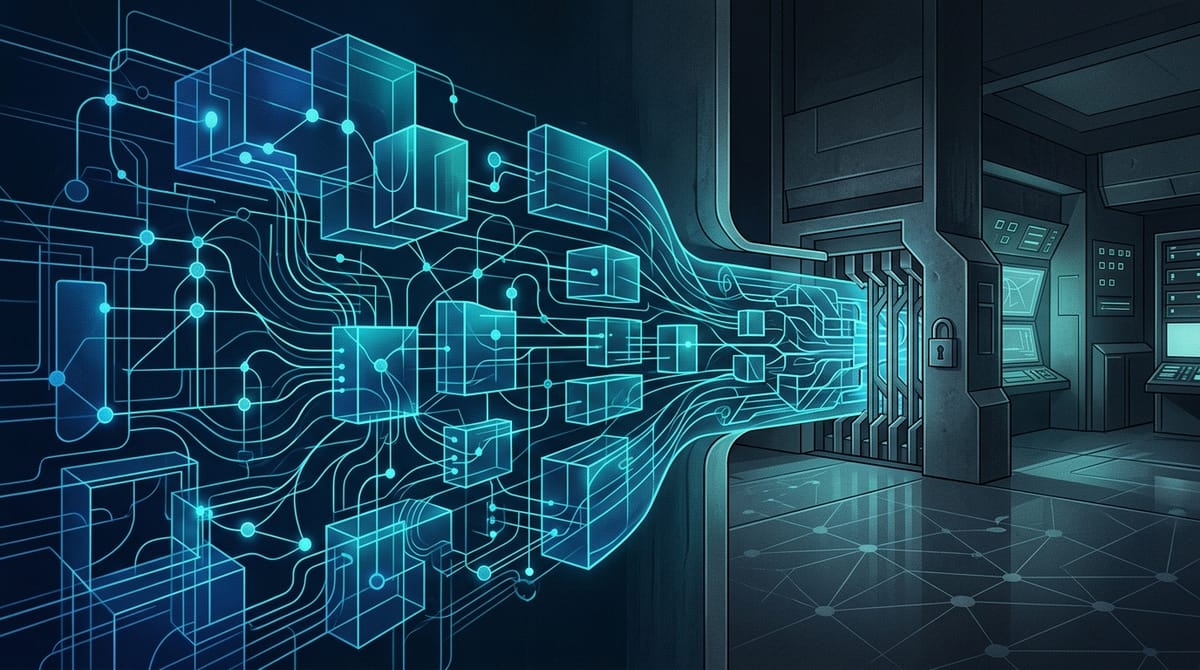
In the nine months between hiring Alexandr Wang for $14.3 billion and launching Muse Spark, Meta deleted its entire AI training infrastructure, rewrote its model architecture, and rebuilt its data pipelines from zero. Then it released the result as a closed-source model accessible only through its own app and a private API preview (AI News). The company that spent three years championing open weights — the company whose Llama models had been downloaded 1.2 billion times at roughly a million downloads per day — shipped its most capable model yet and locked the gates behind it. But the coverage framing this as a betrayal is reading the wrong story entirely. Open-source was never the mission. It was the mechanism — and once it had done what it was built to do, the mechanism was always going to be retired.
What Llama actually accomplished
Meta released Llama 1 in February 2023, Llama 2 that July, Llama 3 in April 2024, and the Llama 4 family in early 2025. Every major variant shipped with downloadable weights and permissive licensing. The developer community responded: by early 2026, Llama had become the default foundation model for startups, academic labs, and anyone who did not want to pay per token for API access to OpenAI or Anthropic (Danilchenko).
But Llama's real function was not to democratize AI. It was to commoditize the foundation model layer while Meta's actual competitive advantage — three billion users across Facebook, Instagram, WhatsApp, and Messenger, plus years of behavioral data and an advertising engine that could monetize attention at scale — remained untouched. If every competitor had to build on equal-access open models, then the differentiator shifted from who had the best weights to who had the best distribution. Meta had the best distribution. Open-source was not idealism. It was a weapon against the business models of every lab trying to build a moat around proprietary weights (Why MCP Became the Real AI Platform War).
That weapon worked. It reshaped the competitive landscape. It also produced a community that now feels the ground shifting beneath it.
When the weapon becomes a liability
Llama 4's launch in early 2025 landed poorly. CNBC described it as a "disappointing debut" that "failed to captivate developers" (BeFreed). Meta was forced to defend the release against reports of mixed quality, blaming bugs. The credibility hit was real and immediate — not because Llama 4 was catastrophically bad, but because Meta had trained the market to evaluate its models against the open-source community's expectations rather than the enterprise buyer's requirements.
The problem was structural. If your flagship model is open, every flaw is visible, every shortfall is downloadable, and every competitive gap is measurable by anyone with a GPU cluster. OpenAI and Anthropic could iterate behind closed doors. Meta had to ship its homework.
By mid-2025, the gap between Llama 4 and the frontier models from OpenAI, Google, and Anthropic was widening. Zuckerberg's response was not to double down on open development. It was to bring in Alexandr Wang, create Meta Superintelligence Labs, and rebuild everything from scratch in nine months (Marketing Agent Blog). Wang said it plainly on X: "Nine months ago we rebuilt our AI stack from scratch. New infrastructure, new architecture, new data pipelines. Muse Spark is the result of that work" (Danilchenko).
What closed-source bought Meta
Muse Spark scores 52 on the Artificial Analysis Intelligence Index, roughly tripling Llama 4 Maverick's score of 18 (AI News). It uses "thought compression" — Meta claims 58% fewer tokens than competing frontier models for equivalent outputs. It runs in three modes: Instant for fast queries, Thinking for multi-step reasoning, and Contemplating, which spins up parallel sub-agents that reason simultaneously before synthesizing a single response (Danilchenko).
On HealthBench Hard, Muse Spark scores 42.8, more than doubling Gemini 3.1 Pro's 20.6 and beating GPT-5.4's 40.1. Meta trained the model with data curated in collaboration with over 1,000 physicians (AI News). On coding and abstract reasoning, it trails the leaders — a trade-off Meta has been candid about.
The efficiency claim matters more than the benchmark rankings. Meta says Muse Spark matches Llama 4 Maverick's performance at an order of magnitude less compute. That is not incremental optimization. It is a different cost structure — and it is one that only works if Meta does not have to give the architecture away.
The distribution play that makes benchmarks secondary
Muse Spark is not primarily competing for the developers who download model weights. It is competing for the three billion people who open a Meta app every day. The model is rolling out across Facebook, Instagram, WhatsApp, Messenger, and Meta's Ray-Ban AI glasses over the coming weeks. Every post you have liked, every brand you follow, every styling choice you have engaged with on Instagram becomes input for Muse Spark's "shopping mode," which turns your social graph into personalized product recommendations (Danilchenko).
OpenAI has roughly 300 million monthly ChatGPT users. Anthropic sells to enterprises. Google has Search. Meta has the social graph — and it has built a model specifically designed to convert that graph into commerce at a scale where the model does not need to charge for API access or sell subscriptions to justify its training cost. The model pays for itself through ad and commerce revenue (Danilchenko). Meta's AI capital expenditure for 2026 sits between $115 billion and $135 billion — nearly double last year's spend (BeFreed). That money goes where the strategy goes, and the strategy goes to Muse.
The dual-track question
Meta says Llama continues. It says it may open-source future versions of the Muse series. Wang has stated that "bigger models are already in development with plans to open-source future versions" (AI News). The developer community is being asked to take that on trust.
The structural problem is this: Meta's best talent, biggest compute allocation, and leadership attention are now pointed at Muse. Llama remains, but maintaining an open-source model family while your primary investment goes to a closed proprietary line is not the same as developing it at the frontier. Maintenance mode and frontier development are different things. The capability gap between Muse Spark and the last open-source Llama release will widen with every quarter, unless Meta commits to genuine parallel investment — and committing to parallel investment in a model you give away while you build a model you charge for is the kind of thing that sounds reasonable in a press release and looks irrational in a budget review (The Moat That Eats Itself).
What the ecosystem does now
The 1.2 billion Llama downloads represent an enormous installed base of developers, startups, and enterprise teams who built on the assumption that Meta's best models would remain accessible. Some of those teams are now auditing their stacks for Llama dependencies they did not know they had — content automation platforms, SEO tools, ad creative assistants that were built on Llama precisely because the economics of self-hosting an open model worked (Marketing Agent Blog).
The alternatives are not absent. Google released Gemma 4 on April 2 under Apache 2.0, and the 31B variant ranks third globally among open models on Arena AI (AI Insider). Qwen 3's 72B dense model ships under Apache 2.0 and tops dense models on reasoning tasks. Ai2 released OLMo 2 32B with fully open training data and code. Mistral's Codestral 2 went Apache 2.0 — a notable shift from its previous restrictive licensing for code models (Fazm). The open-source ecosystem is more alive than the Meta-specific framing suggests.
The real question is not whether open-source AI survives Meta's pivot. It will — on Gemma, Qwen, OLMo, and the next wave of models from labs that have open distribution as a genuine strategic commitment rather than a temporary lever. The question is what Meta's reversal teaches about the structural incentives that determine whether open-source is a permanent strategy or a conditional one. The answer is uncomfortable: open-source is durable when the company releasing the weights has no product that the weights could compete with. The moment the weights become the product — or the moment a better model built on different architecture makes the open weights a liability rather than an asset — the incentive structure flips, and it flips fast.
Zuckerberg did not pay $14 billion for Alexandr Wang to ship open weights. The Llama era gave Meta influence, ecosystem, and a mechanism to commoditize competitors' moats. Muse Spark is what you build once that mechanism has served its purpose and you need something that protects your own.
The unresolved question is not whether Meta broke faith with open source. It is whether developers will keep mistaking a platform's temporary leverage strategy for a permanent public commitment. Open weights can still matter, but only when the incentives behind them remain stable after the distribution war changes. That is the sharper lesson of Muse Spark: openness is powerful, but in AI infrastructure it is often a phase of competition, not a guarantee about where leverage will sit next.