The Real AI Race Is Over Coordination
AI’s undercovered race is no longer just about smarter models. It is about who can remove the most coordination work between intent and outcome.

Here is a good way to tell whether AI is changing in a serious way: watch what the products stop showing you.
They used to show you answers. Now they are trying to show you less of the process and more of the result. That is not a cosmetic product choice. It is a clue about where the real race is moving.
Anthropic’s new Dispatch feature is built around task handoff: instead of walking you through each intermediate step, it promises to come back with a spreadsheet, a memo, a comparison table, or a pull request when the work is done.
Claude Remote pushes the same idea from another angle. A local session can keep running on your machine while you reach into it from your phone, tablet, or browser, which means the product is no longer just selling intelligence. It is selling continuity.
Manus Desktop is making a related bet with “My Computer,” which tries to bridge cloud intelligence and local execution. The company’s examples are revealing: organizing thousands of flower-shop photos, renaming invoices, building a Mac app through terminal commands, or finding a contract on your home computer and emailing it while you are away.
OpenClaw pushes the category even further outward by turning channels like Telegram, WhatsApp, and Discord into control surfaces for always-available agents. That framing helps explain why coordination tools are suddenly pulling unusual attention. In March 2026, OpenClaw briefly became the fastest-growing open-source software project ever on GitHub by star velocity, which is a useful signal that people are not just looking for better answers anymore. They are looking for better ways to route work.
Those are not four versions of the same chatbot story. They are signs of a market trying to solve a different problem.
The new race is not just over smarter models. It is over who can reduce the most coordination burden between intent and outcome.
The part of work most people forget to count
Most work does not fail because the core task is impossible. It fails because too much has to happen around the core task.
Someone has to gather context. Someone has to route the request. Someone has to remember where the last version lives. Someone has to turn an email into a task, a task into an update, and an update into a next step. Someone has to notice that a workflow paused halfway through and stitch it back together.
That layer of work is easy to ignore because it rarely looks prestigious. It is also where a huge amount of modern friction lives.
This is why the phrase coordination burden matters more than benchmark drama. Once models become capable enough to search, summarize, code, analyze, and act through tools, the new question is no longer “can the model do the task?” The harder question is whether the system can carry the chain without forcing the human to keep reassembling it.
Why product behavior is changing
The product signals are unusually clear if you read them closely.
Dispatch docs describe a persistent thread you can reach from your phone or desktop, where Claude can keep using local files, connectors, plugins, and desktop apps through computer use.
Remote Control describes the web and mobile interface as “just a window” into a session still running on your machine. That phrasing matters. It means the product is not only selling intelligence. It is selling continuity.
Manus Desktop describes closing “the gap” between cloud agents and the local machine, then gives examples that are not glamorous but revealing: organizing thousands of flower-shop photos, renaming invoices, building a Mac app through terminal commands, or remotely retrieving a contract file from home and emailing it through Gmail.
OpenClaw docs present a self-hosted gateway that makes agents reachable from the messaging channels people already live in. Again, the key point is not the conversation. It is the control surface.
Put these together and the pattern sharpens. The market is trying to make AI systems less like answer engines and more like things that can hold a thread of work across space, time, and tools.
The hidden race is over handoffs
This is where most coverage still falls behind the product reality.
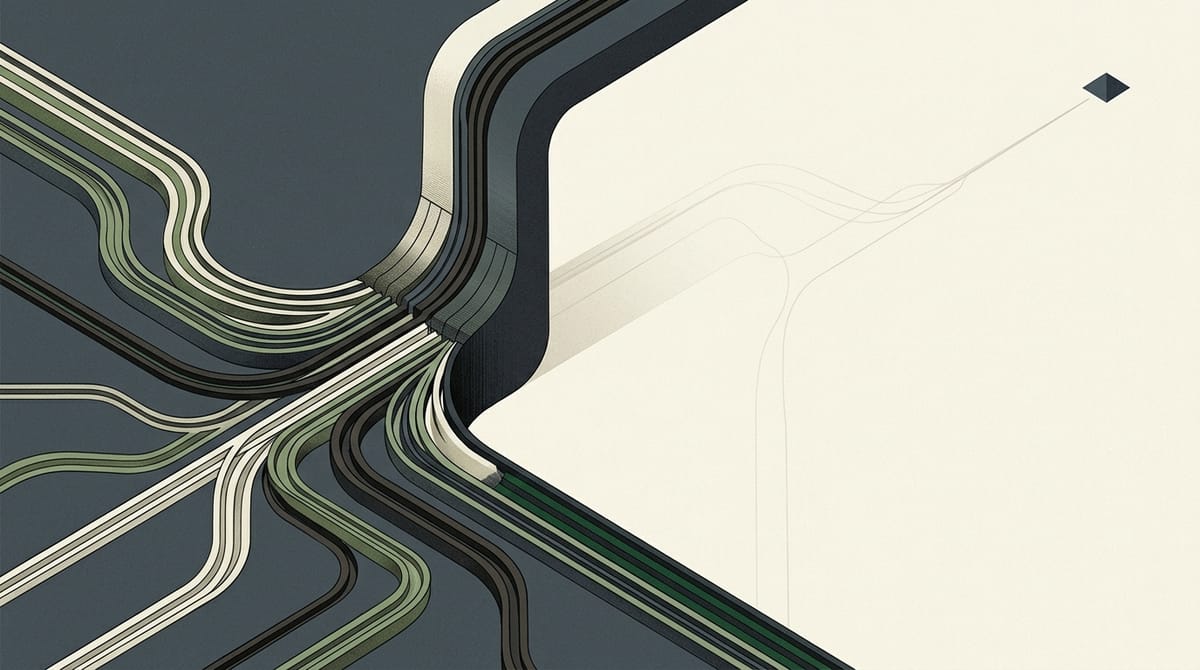
The undercovered contest is not only about better reasoning. It is about better handoffs.
Can the system preserve context between one step and the next?
Can it move from phone to desktop, from cloud to local machine, from chat to terminal, from task to output, without dropping the thread?
Can it hand work back to the human at the right moment instead of at every moment?
That is what makes orchestration more important than it sounds. Orchestration is not just plumbing. It is the difference between a product that looks impressive in isolation and one that actually reduces work in sequence.
A lot of AI still performs well at the step level and poorly at the chain level. It can answer, but not carry. It can assist, but not hand off. It can act, but not maintain coherence through interruption, resumption, approval, and context switching.
That is why coordination is becoming the scarcer asset.
The first work to shrink is not what most people expect
The first meaningful productivity gains may not come from replacing the most intellectually prestigious work. They may come from shrinking coordination labor.
Not the presentation. The work around the presentation.
Not the analysis itself. The work required to collect the files, line up the context, convert the notes, move the draft, ask for the update, and push the result through the next system.
This is one reason the current product shift matters so much. If systems get better at carrying these transitions, they start changing how work feels, not just how one task performs.
That has implications far beyond software UX. Teams are built around handoffs. Managers absorb coordination overhead. Operations functions exist partly to keep workflows from breaking. Whoever reduces that burden is not just building a better assistant. They are rewriting where friction lives in organizations.
Why this is a stronger frame than the usual ones
The model-race frame is too narrow. The power-race frame is often too abstract. Both miss what users and organizations actually feel day to day.
Coordination is where the user feels the pain.
Coordination is where products quietly win or lose.
Coordination is where one tool becomes ten extra follow-ups, or where ten follow-ups disappear into one delegated chain that actually resolves.
That is what makes this a more useful frame. It is close enough to lived workflow reality to explain why certain products suddenly feel more consequential than they did six months ago.
The better question now
So the question worth asking is no longer just who built the smartest model.
The better question is this:
Who is building systems that remove the most coordination work between a person’s intent and a finished outcome?
That is where the deeper race is moving now.
Not only toward intelligence.
Toward orchestration.