The Broadcast Booth as Battlefield: How OpenAI Bought the Room Where AI Gets Discussed
OpenAI’s TBPN deal matters less as a media acquisition than as a bid to own the interpretive layer where AI power gets narrated, normalized, and defended.

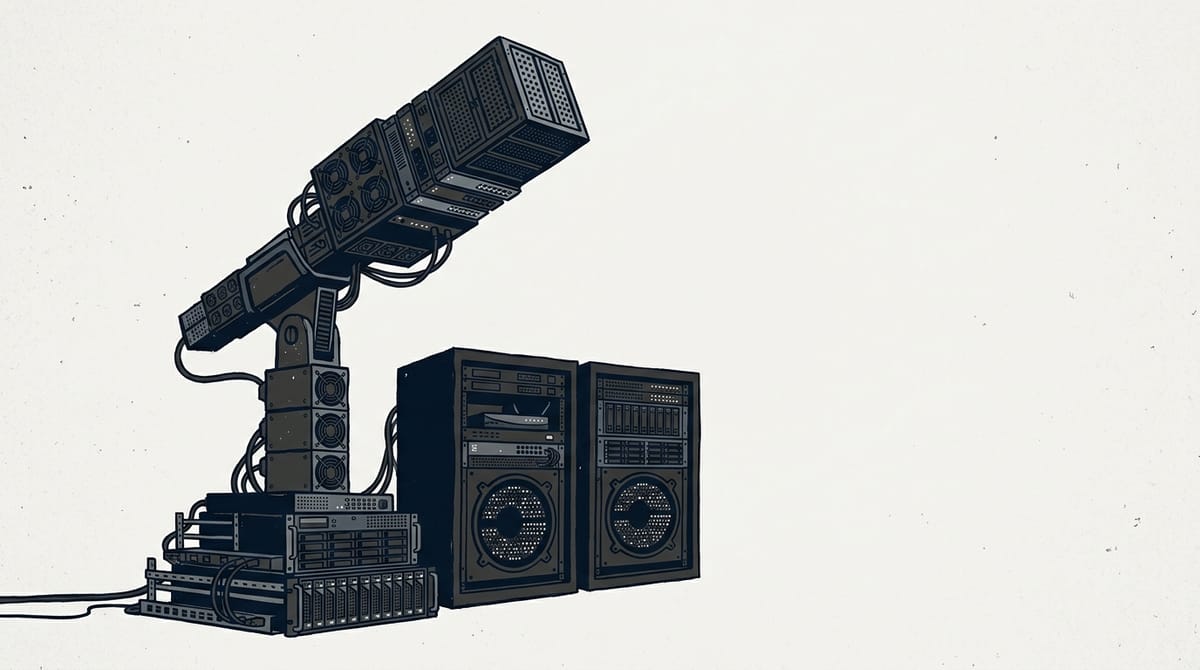
The most important part of OpenAI’s TBPN deal is not the media asset. It is the right to stand closer to the microphone than everyone else.
A frontier lab that wants to shape regulation, talent flows, investor belief, and public legitimacy does not only need better models. It needs influence over the rooms where the technology gets interpreted for elites who can move capital, write policy, and harden consensus.
The asset is not content. It is audience position.
When OpenAI acquired Technology Business Programming Network, the interesting detail was not the revenue multiple. It was the mismatch between what TBPN makes and what it offers. Reports around the deal described a network with roughly $30 million in annual revenue and an audience concentrated in founders, operators, and investors rather than a mass consumer base. That changes the logic of the acquisition. This was not a scale media buy. It was a targeted purchase of a trusted stage.
That stage matters because AI companies now compete on more than product capability. They compete on narrative privilege: who gets to define what counts as progress, what counts as safety, and what counts as a reasonable concentration of power. In that environment, owning a venue where elite interpretation happens is a strategic asset.
The reporting line sharpened the point. TBPN sits under Chris Lehane, OpenAI’s chief global affairs officer, not under a neutral content or partnership function. That placement suggests the company understands narrative not as branding garnish, but as part of its political operating system.
Media ownership changes the questions before it changes the answers.
The cheap version of this argument is that TBPN will now go easy on OpenAI. That is plausible, but it is also too shallow. The deeper effect of ownership is usually upstream. It reshapes which topics get treated as central, which tensions feel impolite to press, and which frames become common sense before any formal censorship is needed.
That is why editorial independence pledges do not fully settle the issue. Hosts can retain day-to-day control and still operate inside a new gravitational field. Corporate ownership alters incentives around access, escalation, tone, and reputational risk. The resulting shift is often subtle enough to deny and powerful enough to matter.
In AI, that matters even more because the industry is still trying to stabilize its own legitimacy. Companies want to look simultaneously transformative, safe, nationally strategic, and too important to restrain clumsily. A media property that can rehearse those identities in front of high-leverage audiences is not just an outlet. It is infrastructure for elite alignment.
Why this matters now
OpenAI is moving into a period where technical leadership alone will not secure its position. The company is facing scrutiny over safety claims, concentration, labor displacement, competition, and its relationship to state power. At the same time, it needs developers, enterprise customers, investors, and policymakers to keep treating it as the default center of gravity in AI.
That is what makes narrative control operational. If you can shape how the most connected part of the market talks about the field, you can influence who sounds credible, which risks sound urgent, and which forms of oversight look constructive versus hostile. The story around the company starts to function like a policy pre-clearance layer.
There is a second-order effect here too. Once one frontier lab treats media adjacency as strategic infrastructure, others will notice. The competition may no longer be limited to model labs courting journalists or placing executives on podcasts. It may move toward direct ownership, favored distribution channels, and semi-captive forums where access and interpretation reinforce one another.
The real comparison is not to PR. It is to platform governance.
This is where most coverage stays too small. The relevant analogy is not a press office buying better promotion. It is a platform gaining control over the recommendation layer that determines what users encounter first. Narrative power works similarly. If you influence the ranking layer of debate, you do not have to silence every critic. You only have to make certain lines of questioning feel marginal, late, or unserious.
That is what turns media ownership into governance power. The governance is informal, but the effect is real. It can change investor appetite, soften elite resistance, and normalize a worldview in which one company’s strategic objectives are repeatedly mistaken for the field’s natural direction.
As How AI Governance Is Splitting Between Innovation Theater and Democratic Accountability argues, procedural legitimacy often becomes a way of distributing market power while sounding neutral. The same logic applies here. A discussion venue can look open while still disciplining what kinds of criticism travel well inside it.
There is also a labor and creator angle. How AI Is Repricing Africa’s Creative Economy made the point that value rarely stays where the work happens when the surrounding rails are owned elsewhere. TBPN extends that insight into discourse itself. The people producing commentary may still look independent on the surface while the surrounding interpretive rails are being consolidated by the firms they cover.
What this changes next
The next fight is not only over whether TBPN remains fair. It is over whether AI companies are now entering the business of owning the spaces that translate power into legitimacy. If that pattern spreads, media access, policy access, and market access may start to collapse into one another.
That would make AI debate less pluralistic long before it becomes visibly censored. The more conversation moves through company-aligned channels, the easier it becomes for criticism to survive formally while losing agenda-setting force in practice. That is how concentration hardens culturally before it hardens legally.
A frontier lab does not need to buy every newsroom to benefit from that shift. It only needs enough control over the high-status conversational layer that everyone else starts reacting inside its frame.
When that happens, the room where AI gets discussed stops being a forum and starts becoming part of the product. And once discourse becomes infrastructure, criticism can still speak while losing the power to set the agenda.
Sources
- https://www.reuters.com/technology/artificial-intelligence/openai-acquires-tbpn-2026-04-02/
- https://www.theinformation.com/articles/openai-buys-tech-podcast-network-tbpn
- https://www.tbpn.com/
- https://www.oecd.org/en/topics/artificial-intelligence.html